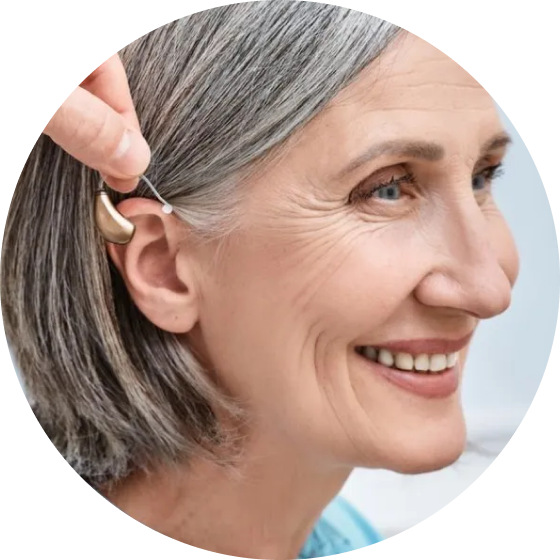
Hearing is your most important asset

Hearing is one of the strongest senses that helps a person communicate, navigate the environment, and live safely.

Properly functioning hearing allows you to recognize voices, sounds, music, and warnings – so it is important to take care of your hearing health in a timely manner.

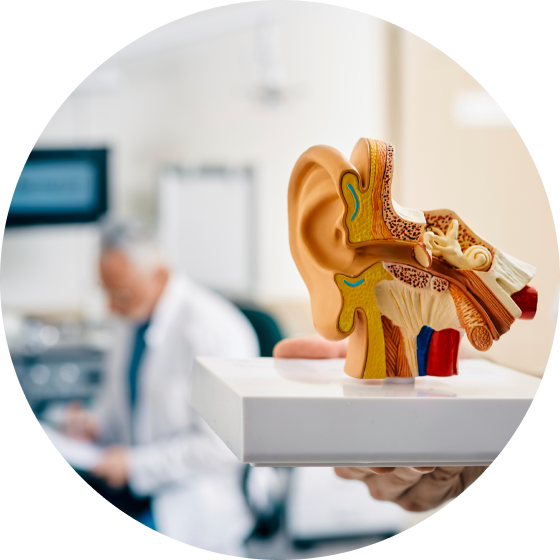
How do we hear?

Main types of hearing loss

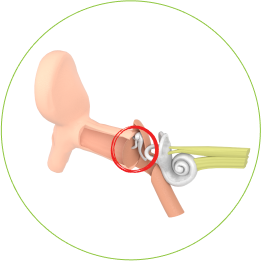
Conductive

Conduction disorder occurs when sound cannot properly pass from the outer or middle ear to the inner ear.

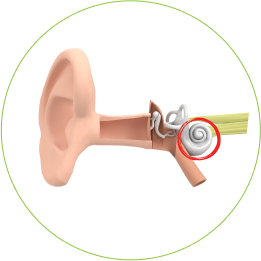
Neurosensory

Neurosensory (sensory) hearing loss occurs when the auditory nerves and inner ear, which are responsible for transmitting sound to the brain, are damaged.

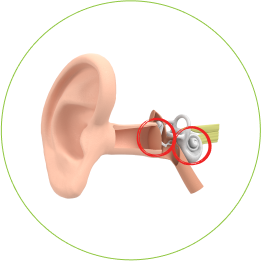
Mixed disorder

Mixed hearing loss is a combination of conductive and sensorineural hearing loss. In this case, damage is found in several parts of the auditory system.

Situations

You hear well, but have difficulty understanding?

Do you often have ringing in your ears?

You hear, but sometimes the words get mixed up?

The most common causes of hearing loss

Hearing loss can be:

Congenital – determined from birth or in early childhood.

Acquired – develops later due to external or internal factors.

Important to know: As we age, all senses weaken, including hearing. Therefore, most people with hearing loss are older people for whom hearing loss is a natural part of the aging process.

Causes that can lead to hearing loss or impairment:

  • Aging
  • Infections, viral diseases
  • Chemical poisoning (intoxication)
  • Ear trauma or mechanical injuries
  • Long-term exposure to loud noise
  • Vitamin deficiency
  • Diseases of internal organs (heart, kidney, circulatory disorders)
  • Diseases of the nervous system (multiple sclerosis, encephalitis, atherosclerosis, etc.)

How to recognize hearing impairment?

Hearing problems often develop gradually, making them difficult to detect in their early stages. However, the earlier they are recognized, the greater the chance of preventing further deterioration and improving quality of life.

The most common signs of hearing loss

Important: Hearing loss can affect one or both ears, be temporary or permanent – so it is important to notice it as early as possible.
If you notice one or more of the following symptoms, these may be the first signs of hearing loss:

  • You often ask for things to be repeated
  • You turn the radio or television up louder than before
  • You have difficulty hearing conversations in noisy environments (e.g., in a restaurant or shopping mall)
  • People seem to speak indistinctly or mumble
  • You avoid telephone conversations because of poor hearing
  • You notice a whistling or ringing in the ears (tinnitus)
  • People around you seem to react more slowly or unusually
  • In children: does not respond to sounds, has difficulty understanding speech, slows down the development of language skills

Take care of your hearing - don't delay

If you notice possible signs of hearing loss in yourself or a loved one, don’t delay. The earlier the diagnosis is made, the more effective the help will be.

Register for a hearing test today

How is a hearing test performed?

A hearing test is a safe, painless and accurate way to assess the condition of your hearing.

A hearing test can only be performed by an otolaryngologist (ENT) or a hearing aid specialist (audiologist). During the test:

  • Ear examination with a videoscope
  • Before the examination, the specialist will examine the ear canals and eardrums with a modern camera, the image of which you will also see on the screen.
  • Audiometry – determination of hearing thresholds
  • Air conduction – tested using sealed headphones
  • Bone conduction – a special bone sensor behind the ear is used
  • Tone of different intensity and frequency is used (250 Hz – 8000 Hz)
  • An audiogram is obtained – the results of the examination are displayed graphically and the hearing thresholds are accurately indicated.

What is the difference between an audiological hearing examination and a hearing test?

The online test does not provide an accurate diagnosis. It can be a first step in deciding whether it is time to schedule a professional hearing test. During the test, you will learn:

  • Your hearing sensitivity to sounds of different frequencies
  • Features of both ears are evaluated
  • Recommendations are provided, but no precise diagnosis is indicated

Hearing rehabilitation methods

Hearing rehabilitation is a path to better hearing through individually tailored solutions. Most hearing disorders are treated with hearing aids.
However, there are diseases that require other methods: surgery or medication. It is necessary to consult a doctor for an accurate diagnosis.